
Why Your Anti-Wrinkle Treatment Isn't Lasting (And It’s Not Your Skin)
It is one of the most common frustrations in aesthetics: you invest in an anti-wrinkle treatment, love the initial smoothness, but by week eight, the movement is back. You might assume your skin is "resistant" or that the product "didn't work."
However, as a GMC-registered GP, I look at the clinical "why" behind longevity. Often, the reason your treatment fades prematurely has less to do with your face and more to do with the strategy behind the needle.
1. The "Under-Dosing" Trap
In an unregulated market, many clinics compete on price, offering "three areas for £150." To make those margins work, they often "under-dose"—using the bare minimum of product. While this prevents a "frozen" look, it also significantly shortens the lifespan of the result.
At Restore Skin Clinic, we don’t treat by "area" alone; we treat by muscle strength. A bespoke, medical-grade dose ensures that the relaxation lasts the full 12–16 weeks you expect.
2. Metabolism and the "High-Burn" Lifestyle
Your body is a biological machine, and it views anti-wrinkle injections as a foreign protein it eventually needs to clear. If you are highly active, frequently use saunas, or have a naturally high metabolic rate, your body may process the treatment faster.
The GP Insight: Zinc deficiency can also play a role. The toxin requires zinc to bind to the nerve ending; if your levels are low, the "hold" may not be as strong.
3. The Importance of "Static" vs. "Dynamic" Lines
If you are treating deep, etched-in lines (static lines) that are present even when your face is still, anti-wrinkle injections alone won't "erase" them. You may think the treatment has failed because the line is still visible, but the muscle itself is relaxed.
The Solution: This is where we pivot to Regenerative Aesthetics, using Polynucleotides to repair the skin’s "canvas" while the anti-wrinkle treatment manages the "movement."
4. Frequency and "Toxin Resistance"
Believe it or not, going too often can be a problem. If you top up your treatment every 8 weeks, your immune system can develop antibodies, making the product less effective over time.
The Restore Standard
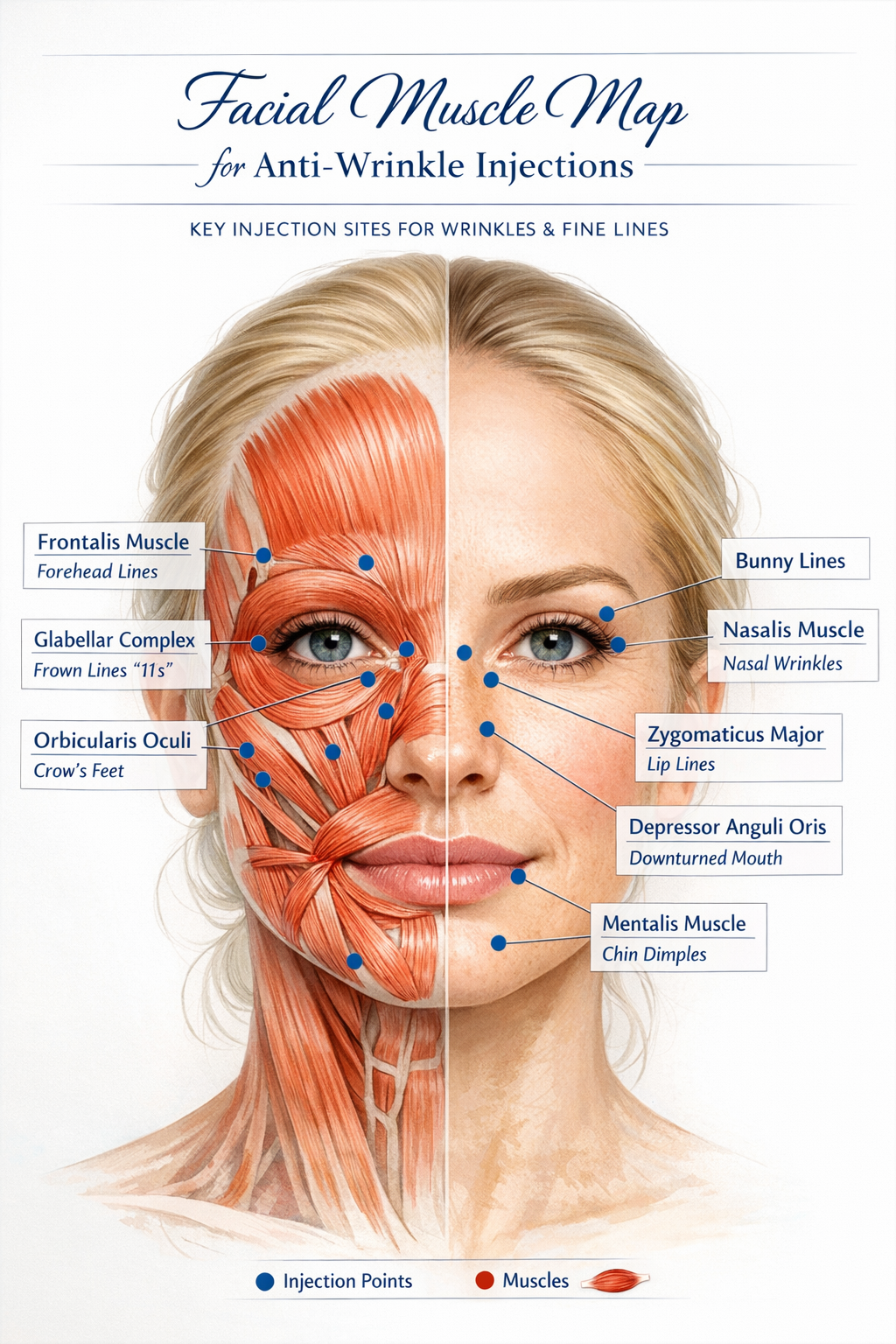
When you book at a doctor-led clinic in Wimborne, you aren't just paying for a syringe; you are paying for a clinical assessment. We map your anatomy, check your medical history, and ensure the dose is exactly right for your lifestyle.
Written & Medically Reviewed by Dr Chi Metcalfe
MBBS, MRCP, MRCPG, GMC-Registered General Practitioner & Aesthetic Doctor
Dr Chi Metcalfe has over 15 years of NHS medical experience and is the founder and lead clinician at Restore Skin Clinic in Wimborne, Dorset. She specialises in natural biostimulatory aesthetics, minor dermatology, and evidence-based skin rejuvenation.
